
01
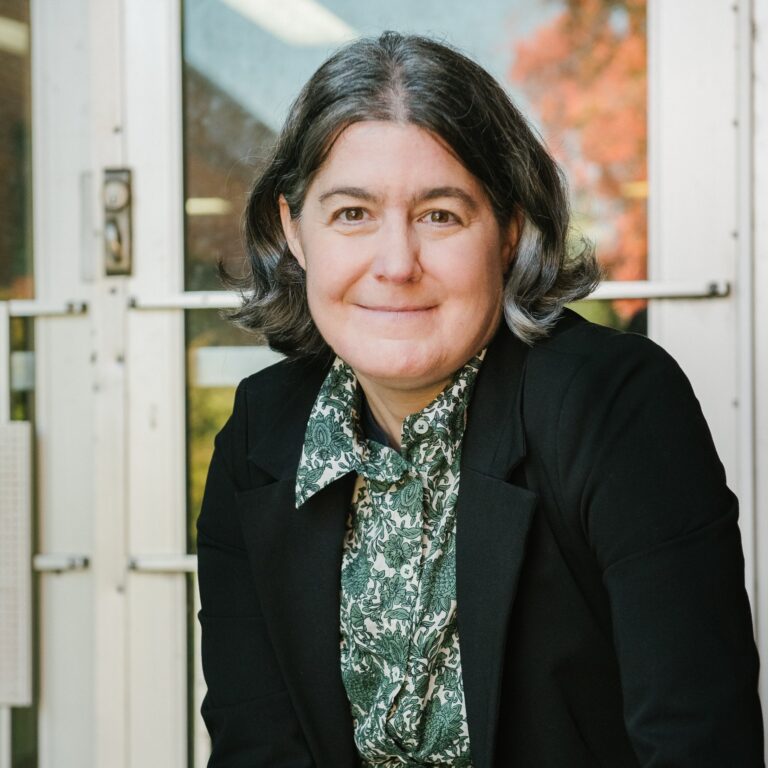
Biography
Annick Lefebvre graduated from UQÀM in 2004 with a degree in theatre criticism and dramaturgy. Her plays include Ce samedi il pleuvait (finalist for the Michel-Tremblay Prize, 2013), La machine à révolte (finalist for the Louise-LaHaye Prize, 2015), J’accuse (a finalist for the Michel-Tremblay Prize, the AQCT Critics’ Prize and the Governor General’s Literary Awards, 2015), Les barbelés (a finalist for the AQCT Critics’ Prize, 2019), ColoniséEs (winner of the Michel-Tremblay Prize and finalist for the Governor General’s Literary Awards, 2019), En crise (2023), Les fantômes (2024), Les mini manifestes (2024), La machine à cons (2025), as well as numerous short texts written for collective events. These short texts have been collected in the anthologies Périphéries (2016) and Polysémies (2022), illustrated by Vincent Partel-Valette. She has rewritten J’accuse twice: for Belgium (2017), and then for France (2022 and 2027). Annick is currently immersed in writing the plays Mourir à répétition and Les poings serrés, and, alongside the author Chloé Chartrand, Tranché.es. She may even be devoting herself, alongside her playwriting activities, to writing projects unrelated to the theatre. The graphic novel adaptation of her play En crise, illustrated by Vincent Partel-Valette, was published by Éditions de La Bagnole in 2025 and was a finalist for the 2025 Governor General’s Literary Awards and the 2026 Yvette-Lapointe Prize (Québec BD). In 2025–2026, she also collaborated with documentary filmmaker Sarah Clément-Colas on the writing of Filles de traverse, a collection of fictional stories about girls from La Rochelle setting sail for America in the 17th century. The collection features texts enhanced with links to film postcards revealing the current landscape of the La Rochelle metropolitan area. Annick Lefebvre was the protégée of author Olivier Choinière at the 2014 Siminovitch Prize and a finalist for this prestigious award in 2020. Annick was also a finalist for the 2025 Jovette-Marchessault Prize. Her plays are published in Quebec by Dramaturges Éditeurs and in France by Esse Que.
Last Updated August 2026
In September, 1999, I am doing my B.A. to become a high school French teacher. Some friends who are studying theatre take me to see the first production of le Théâtre du Grand Jour. The play is called Autodafé and is written by Olivier Choinière. I’ve never heard of Olivier Choinière but I do know the play makes me discover writing that’s like a punch in the face and to which I respond. Along with seeing the show, the audience can take part in a contest: “Write your own Revolutionary Manifesto.” I try my hand. A full year later, I get a call from Sylvain Bélanger, Artistic Director of the company, telling me “In the end, we commissioned manifestos from professional writers, but we’ve organised an event that will take place at Théâtre d’Aujourd’hui and we want your piece to be part of the show.” That’s how, in 2000, when I couldn’t be further from thinking I would ever write for the theatre, Olivier Choinière staged To Shout From All the Rooftops wherein my words were heard by an audience for the very first time.
Next, we jump ahead thirteen years. Thirteen years, during which I ditch my B.A. in teaching, become an apprentice in the creation of the play Incendies (Scorched) by Wajdi Mouawad and I write my first play. Olivier Choinière offers to mentor me in the rewriting and production. On April 9, 2013, at the opening of my play, Ce samedi il peuvait (That Saturday, It Rained), Olivier’s girlfriend, Mélissa, comes to sit beside me and asks if I’m nervous. I say yes. She tells me Olivier is, too. I say impossible. I can’t imagine Olivier could be stressed. Olivier arrives and Mélissa takes his hand and puts it in mine. The clammy palm confirms that he’s a mess, but I know he believes in the work one hundred percent. And in the play… And, I think, in me.
In the spring of 2015, my second play will be produced at Théâtre d’Aujourd’hui, on the same stage as new works by Wajdi Mouawad and Olivier Choinière, which moves me deeply. This season, I will also take part in a collective orchestrated by Olivier. For it, I have dedicated the text I will read to Marianne Dansereau. Marianne is a young actor of 23, but most of all, she is someone who writes plays that blow me away. And, like Olivier once did with me, I will do whatever it takes to ensure that audiences can hear her voice as soon as possible. Just last week, I got a call from Marianne, telling me that Olivier has offered to mentor her in the writing of her next play. I immediately ran out to buy champagne because all these threads meet with a confluence that still moves me deeply.
Thank you, Olivier Choinière, for guiding all my flights; I never thought I’d use the metaphor of a bird to thank you, but I’m sticking to it: thank you for my wings. And “my wings” is also the term we use for a licence to fly, and to me, that feels just right. Yes. To thank you for having taught me to pilot the machine that lets my words take flight in a way that I can make them land wherever I choose, that indeed feels absolutely right!
Thank you, Paul Lefebvre, thank you Marcelle Dubois, thank you Marie-Ève Milot. And thank you to the Siminovitch Prize; thank you for creating an award that encourages real mentorship across multiple generations of artists. I am happy, blessed and honoured to be among you tonight.
Merci à vous tous! Bonne fin de soirée.
Protégé, 2014, Selected by Olivier Choiniere

Olivier Choiniere
02
03
Subscribe today to the monthly e-newsletter.
> Be the first to know about current artistic projects of the Siminovitch Prize community.
> Learn about emerging artists who are shaping the future of Canadian theatre.
> Stay informed about upcoming opportunities and calls for nominations.